
Most practices understand the first part of the AI Simulator.
A patient uploads a photo.
They choose what they’re interested in.
They visualize a potential result.
But what happens after that?
The AI Simulator is not just a visual tool. It is a lead-generation, qualification, and conversion tool designed to move patients from curiosity to consultation. Because when a patient takes the time to try the simulator, they are not just browsing anymore - they are showing interest, they are sharing their goals, and they are giving your team a clear follow up plan.
The Full Journey: From Curiosity to Consultation
Here’s the full patient journey:
A patient sees your marketing
They click into the AI Simulator
They upload a photo or explore their treatment interest
They visualize a potential outcome
They submit their contact information
Your team receives a warmer, more qualified lead
Your coordinator follows up with a more personal conversation
The patient books a consultation
The provider uses the patient’s goals to guide the discussion
The patient feels more confident moving forward
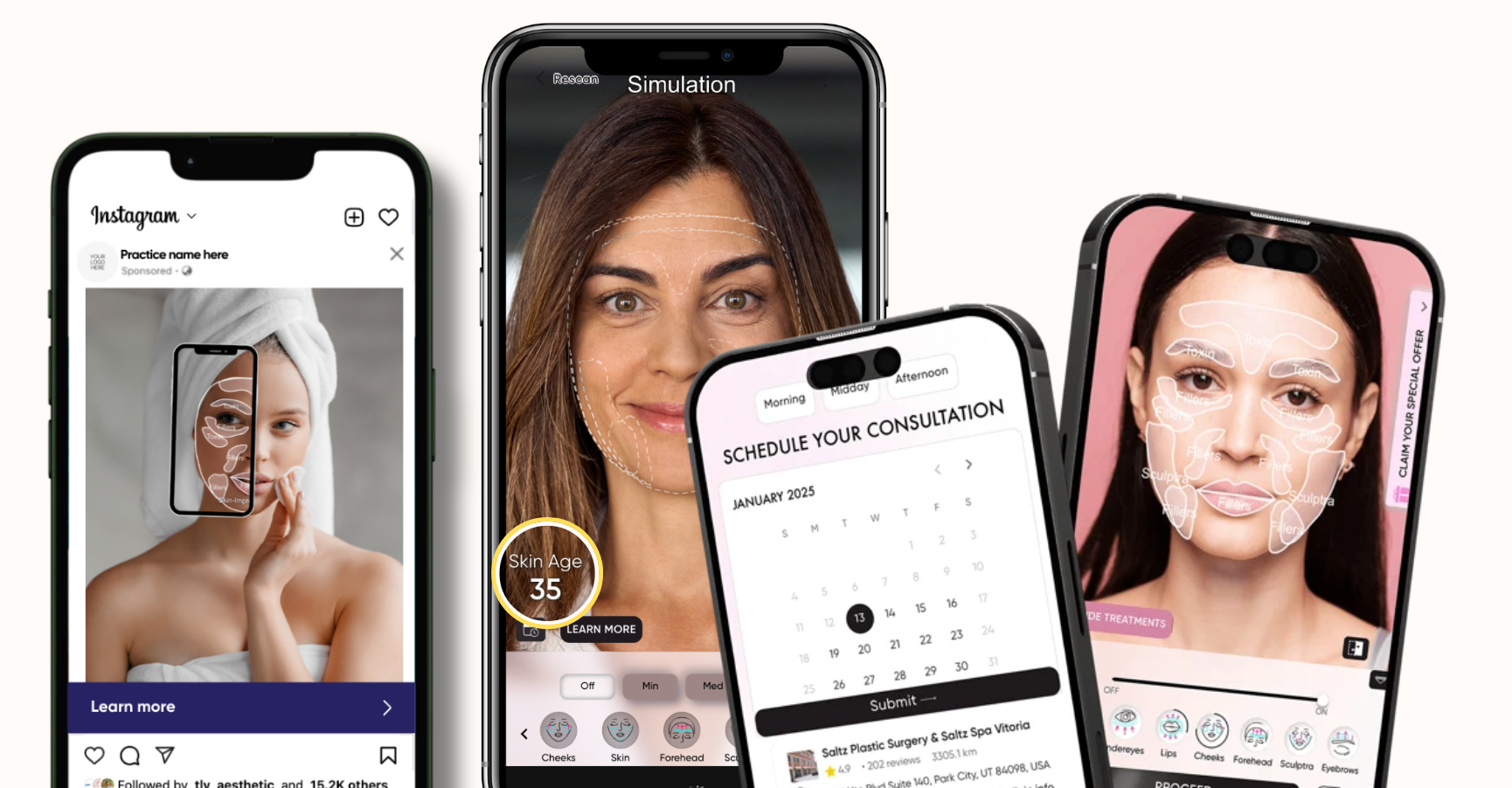
Here's a more in-depth look at the patients journey:
Step 1: The Patient Engages With the Simulator
Instead of landing on a basic contact form or service page, the patient is invited into an interactive experience. The journey starts when a patient clicks into your AI Simulator. This could happen from:
Your website
Your Instagram bio
A Google Ad
An email campaign
An SMS message
A QR code in your practice
A social media post
A website banner or pop-up
They are no longer just reading about Botox, filler, weight loss, or breast procedures. They are exploring what may be possible for them. That shift matters because interaction creates stronger intent than passive browsing
Step 2: The Patient Shares What They’re Interested In and Visualizes a Potential Outcome
As the patient moves through the simulator, they begin giving your practice valuable information while also experiencing the emotional turning point of visualization. They may show interest in:
Facial aesthetics
Botox
Filler
Skin rejuvenation
Jawline definition
Weight loss
GLP-1 programs
Body transformation
Breast augmentation
Treatment planning
This helps your team understand what the patient actually wants before the first phone call. Instead of receiving a generic “I’m interested” lead, your practice gets context:
You know what the patient clicked on.
You know what they explored.
You know what type of result they are thinking about.
You know which service line they may be most interested in.
That makes the lead warmer and the follow-up more personalized.
At the same time, the patient is moving through a powerful emotional shift because before trying the simulator, the patient may be thinking:
“Would this look good on me?”
“Will I still look natural?”
“Is this even worth exploring?”
“What would I look like after losing weight?”
“What size or shape would feel right for me?”
“Would this change actually make me feel more confident?”
This is the emotional turning point. The simulator helps the patient move from imagining to seeing. That does not mean the simulation is a clinical guarantee, but it does give the patient a visual starting point. It helps them feel more connected to the idea of treatment.
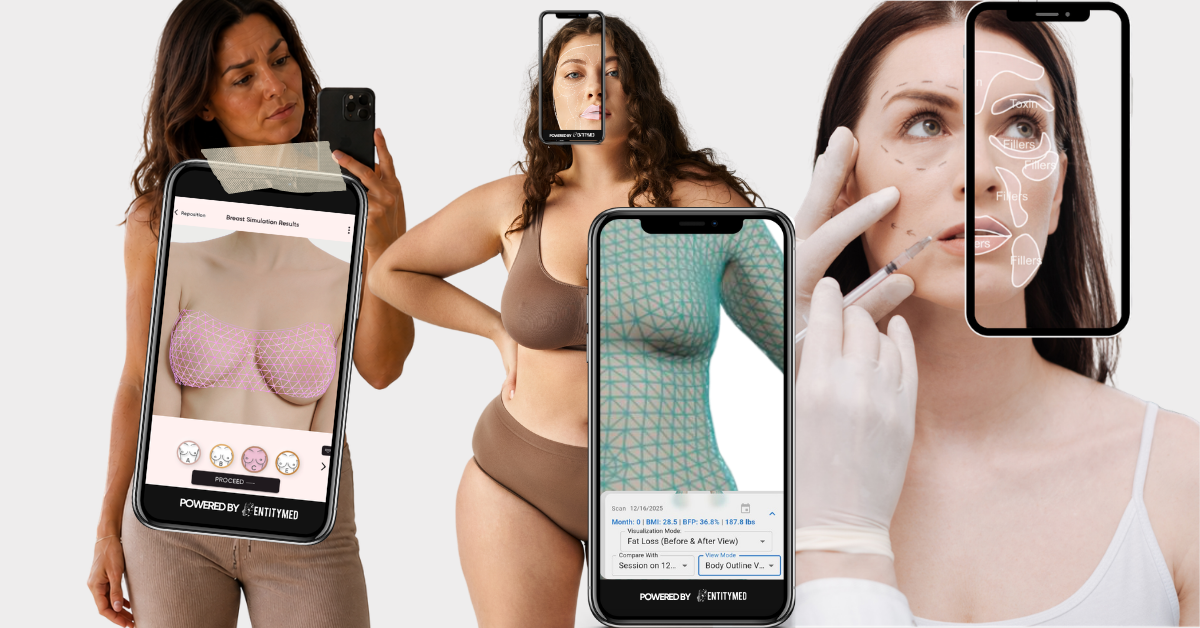
Step 3: The Simulator Captures the Lead
After the patient engages with the experience, the simulator captures their information. This turns anonymous website traffic or social media interest into an actual lead your team can follow up with.
That is one of the biggest advantages of the AI Simulator. Without it, many interested patients leave your website without taking action - they scroll, browse, compare, and leave - and your practice never knows they were even interested.
The simulator changes that - it gives curious patients a low-pressure reason to engage, and it gives your practice a way to capture that interest before it disappears.
Step 4: Follow-Up Becomes More Effective
The AI Simulator gives your team more context, which helps make follow-up stronger because your patient coordinator can speak directly to what the lead cares about.
This saves time, helps your team prioritize leads, makes the patient feel seen and understood and it helps move the conversation forward faster.
Step 5: The Consultation Starts Before the Patient Walks In
One of the most powerful parts of the AI Simulator is that it helps prepare the patient before the consultation. By the time they speak with your team or walk into your clinic, they have already started thinking about:
What they want
What concerns them
What result they are hoping for
What questions they need answered
What they may be ready to explore
That creates a more productive consultation because the provider isn’t starting from zero and the patient isn’t coming in completely unsure.
That can help set expectations earlier, reduce uncertainty, and create a smoother consultation experience.
What’s the difference between a basic website visitor and a simulator lead? One browses and leaves, while the other engages, visualizes, and gives your team a real opportunity to convert.
Want to see how the AI Simulator can help your practice turn curiosity into booked consultations?
Book a strategy call with EntityMed and we’ll walk you through the full lead journey.
About Noam Yadin
Comments:
More Stories
Feeling your practice is stuck?
When your marketing looks and sounds like everyone else’s, patients have less reason to stop and engage - so, many practices feel stuck. But, A technological refresh can change the patient journey
Stop Sending Patients to a Contact Form
Most medspa websites are built around the same goal: Get the patient to fill out a contact form. Patients do not want another form - they want a reason to feel confident enough to take the next step.